
We bring MenB (meningitis B) vaccination clinics to your school, college or university anywhere in the UK. You only pay for the doses actually given, there is no call-out fee, and we work around your timetable. Enquire about an on-site clinic, or call us on 020 3411 5565.

If you run a school, sixth form or university, MenB has probably moved up your list this year. A meningitis outbreak in Kent earlier in 2026 reached secondary schools and sixth forms as well as universities, and the news of it put a lot of parents on alert. The reassuring part is that protecting a whole cohort is simple to arrange, and we can come to you to do it.
At HealthClinic2You we run on-site MenB vaccinations for schools and other educational settings across the UK. Our clinical team comes to your site, vaccinates the pupils or students whose parents have consented, and handles the records and follow-up. The service is delivered by our own clinical team, and every clinician who attends a school is an experienced, DBS-checked vaccinator. You can arrange a clinic through our schools enquiry form or by calling 020 3411 5565.
This guide explains what MenB is and why teenagers are a higher-risk group, who the 2026 NHS programme does and does not cover, how our on-site clinics work, and what they cost. If you want the eligibility detail on its own, we set it out in full in our guide to who gets the MenB vaccine free and who needs it privately.
Protecting a whole year group is one of the simpler things a school can arrange. We come to you, work around your timetable, and you only pay for the doses actually given.
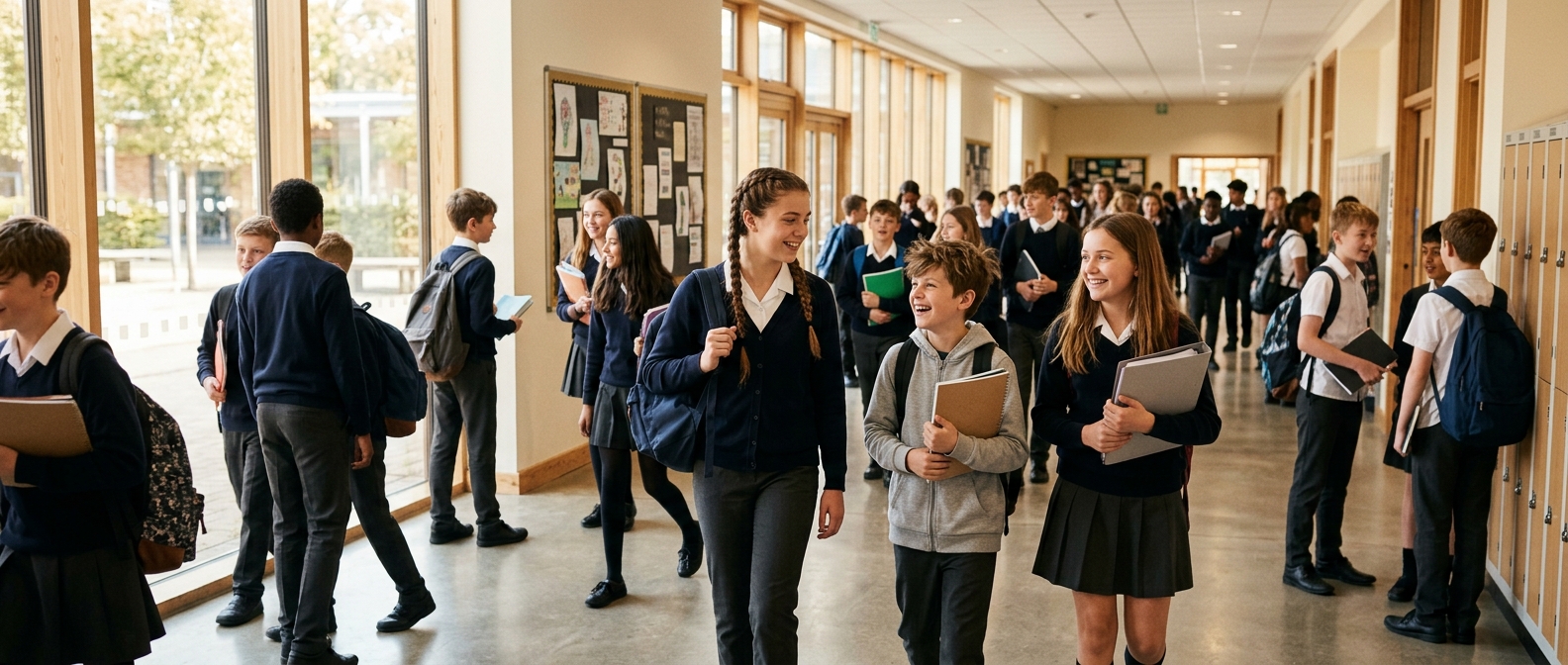
What MenB is, and why schools take it seriously
MenB is meningococcal group B disease, a bacterial infection that can cause meningitis, which is inflammation of the lining around the brain and spinal cord, and septicaemia, which is blood poisoning. Both are medical emergencies. What makes it so serious is the speed. A young person can seem to have a bad cold or flu in the morning and be gravely ill by the evening.
Most people who catch it recover with prompt treatment, but MenB can kill, and some survivors are left with lasting effects such as hearing loss, brain injury or the loss of fingers, toes or limbs. UK Health Security Agency figures put the death rate at around one in ten. That is why vaccinating before any exposure matters so much: once symptoms begin, there is very little time.
Knowing the early signs is part of protecting a cohort, and we would always rather a parent or a member of staff acted too soon than too late. Our guide to meningitis signs and symptoms sets out what to look for and, importantly, why you should never wait for a rash. If you suspect meningitis, that is a 999 call, not a wait-and-see.

Who is most at risk, and who our clinics are for
Anyone can catch MenB, but teenagers and young adults are a recognised higher-risk group, second only to babies. The bacteria spread through close contact such as coughing, sneezing, kissing and sharing drinks or vapes. Put a few hundred young people together in a school, a sixth form or halls of residence and you have the conditions in which it spreads most easily.
Our on-site clinics are built for exactly these settings. We work with secondary schools and sixth forms, colleges, universities and halls, and we vaccinate pupils and staff alike. The service suits a few groups in particular:
- Pupils in Years 7 to 12 who are outside the NHS programme and were never vaccinated as infants. We explain this group in detail in our page on private MenB vaccination for Years 7 to 12.
- Students and young people who missed MenB as babies and want to catch up. See our guide to MenB catch-up for those who missed the infant programme.
- International and transferring students whose records are incomplete or who need to align with the UK schedule.
- School and university staff who want the protection themselves.
The 2026 NHS programme, and who it does and does not cover
This is the part schools and parents ask about most, so it is worth being precise. In 2026 the NHS introduced a one-off MenB programme in England, and it is targeted rather than universal. The free NHS vaccine is offered to young people completing Year 13 in summer 2026, specifically those born between 1 September 2007 and 31 August 2008, and to first-time under-25 university or residential college starters. Babies have been offered MenB routinely since the infant programme began, for those born on or after 1 May 2015.
If your child or your pupils fall into one of those free groups, our advice is simple: take the NHS offer up. What the programme does not cover is most of the school population. Pupils in Years 7 to 12 sit outside it, as do many students who do not meet the first-year, under-25 criteria. That gap is where a private on-site clinic makes sense, and it is the group we focus on. Our eligibility guide walks through every scenario so no one pays for something they could get free.
Check if your school qualifies for a clinic →
How our on-site clinics work
We keep the process simple for the school, because the whole point is to take the work off your plate rather than add to it. From first enquiry to follow-up, it runs in four steps.
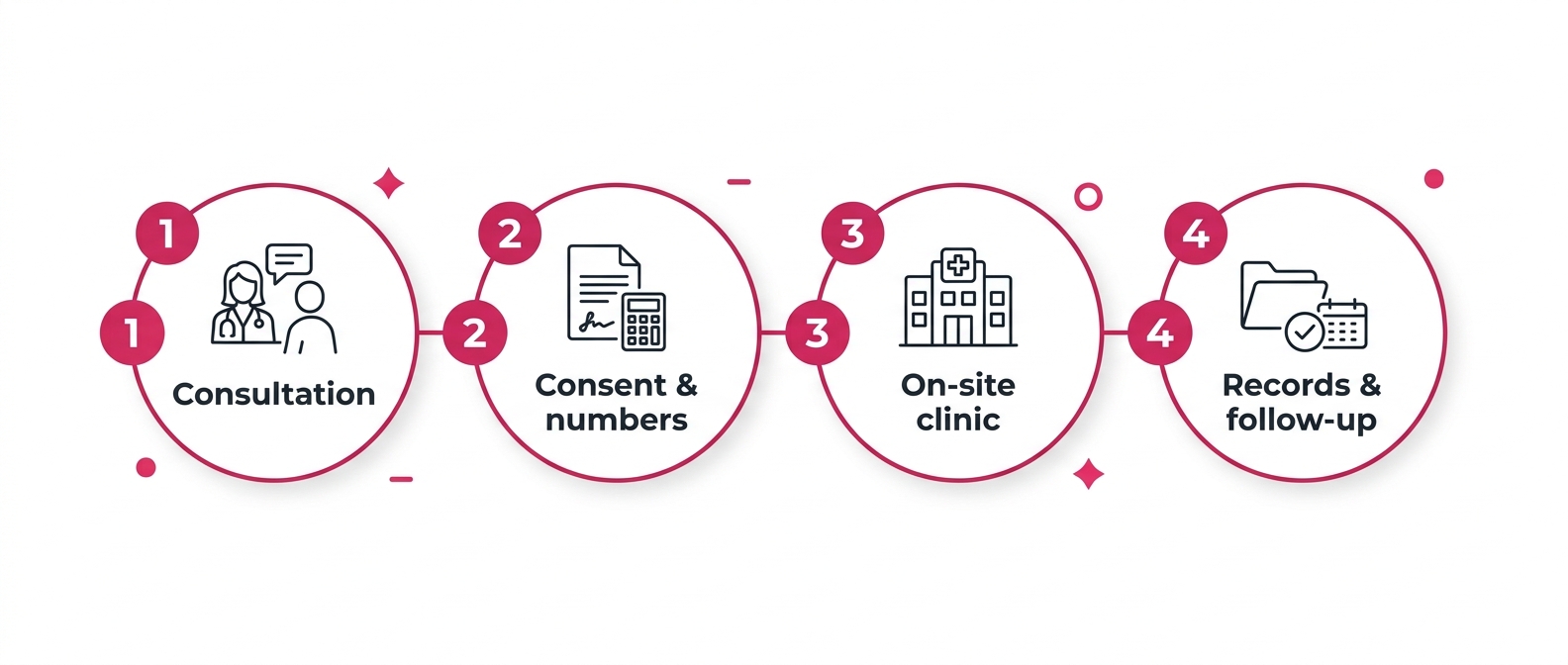
- Consultation with your institution. We talk through your cohort, your dates and any particular needs, and agree how the sessions will run.
- Cohort needs assessment. We work out numbers, gather parental consent electronically in advance, and confirm which pupils are booked in.
- On-site clinic delivery. Our clinicians come to you and vaccinate on the day, working discreetly and keeping the queue moving so lessons are barely disrupted.
- Documented records and follow-up. We record every vaccination, share what you need for your records, and arrange a second visit for the second dose or for anyone who missed the first.
Clinics are built around your timetable, not ours. We can run before or after school, during form time, in a single period, across several days, or as a full day for a whole year group. For multi-academy trusts and multi-campus universities we cover several sites, and if a trip or an exam schedule shifts, we move the date. We ask for two to three weeks’ notice to schedule a clinic, though we can often move faster when it is urgent.

Consent, safeguarding and DBS
Bringing an external team into a school is a safeguarding decision as much as a clinical one, so we hold ourselves to the standard you would expect of a school-based service. Parental or guardian consent is collected electronically ahead of the session, so there is a clear record before anyone is vaccinated. Vaccines are given under a Patient Group Direction, which is the same legal framework used across NHS vaccination services.
Every clinician who attends a school holds an enhanced DBS check including the children’s barred list, verified before they are deployed. Our teams are safeguarding-trained, we work to your own safeguarding policy while we are on site, and any concern is escalated to your designated safeguarding lead the same day. In practice, schools tell us our teams are professional, warm with the pupils and self-sufficient, so they do not need chaperoning around the site.
The vaccines we use: Bexsero and Trumenba
We protect against MenB with Bexsero or Trumenba. Bexsero is the most widely used MenB vaccine in the UK and the one given to babies on the NHS schedule, licensed from two months of age. Trumenba is an alternative, licensed from ten years of age. Both are well established, both protect against MenB, and neither contains live bacteria, so neither can cause meningitis. Our clinician confirms which is appropriate for the age group.
For teenagers and young adults, MenB is a two-dose course, with the doses given at least four weeks apart. Both doses are needed for full protection, which is why we plan the second visit at the same time as the first. If you want the detail on how MenB compares with the other meningitis vaccine teenagers hear about, our guide to MenB versus MenACWY explains the difference.
Simple pricing, with no budget risk for the school
We have built the commercial side to remove the thing that usually stalls these decisions, which is committing a budget before you know how many pupils will take part. The price is £135 per dose actually administered — £270 for the full two-dose MenB course — with no booking fee, no set-up fee and no call-out fee. The only condition is a minimum of ten pupils per clinic.
The way it works in practice is that the parent pays for their own child. We invoice the school for the doses given, and the school collects from parents, which keeps it simple for families and gives you a single point of contact. If uptake is lower than expected, or a pupil does not turn up on the day, you are not left out of pocket, because you only ever pay for doses that were actually given.
- £135 per dose administered — £270 for the full two-dose MenB course
- No booking, set-up or call-out fee
- Minimum 10 pupils per clinic
- Invoiced to the school per dose given; parents pay per child
Why schools choose us
We run on-site immunisation clinics for schools, colleges and universities across the UK, and vaccinating children and young people is a specific skill rather than a general one. Our clinicians are used to needle-anxious pupils, they know how to keep a queue of teenagers calm and moving, and they work discreetly so a nervous pupil is not doing it in front of their whole year group. Schools consistently tell us the clinic ran quieter and faster than they expected.
Because we sit within a group of services, we can also help beyond MenB when you need it, from routine and catch-up immunisations to seasonal flu and travel vaccines for school trips. For this programme, though, MenB is the focus, and everything above is built to make protecting a cohort as easy as possible for you.
Arrange an on-site MenB clinic →
How to arrange a clinic
Getting started is quick. Send us an enquiry with a rough idea of your cohort and the dates you have in mind, and we will do the rest.
- Enquire. Use our schools enquiry form or call 020 3411 5565 to talk it through.
- We plan it with you. We agree dates, gather consent electronically and confirm numbers.
- We come to you. Our team runs the clinic on site, around your timetable.
- We follow up. We handle records and schedule the second dose, plus a catch-up session for anyone who missed the first.
Frequently asked questions
Do you come to the school, or do pupils travel to you?
We come to you. Our clinical team delivers the vaccinations on site at your school, college or university, anywhere in the UK, so pupils and staff do not need to travel.
How many pupils do we need for a clinic?
The minimum is ten pupils per clinic. There is no upper limit: each clinician can vaccinate around 100 pupils in a day, and we can send several clinicians to cover a whole year group in one visit.
How much notice do you need?
We ask for around two to three weeks to schedule a clinic, though we can often move faster if it is urgent. Get in touch as early as you can and we will find dates that fit your timetable.
How does payment work?
You are charged £135 per dose actually administered (£270 for the two-dose course), with no booking or call-out fee and a minimum of ten pupils. Parents pay for their own child; we invoice the school for the doses given, and the school collects from parents. If uptake is low, the school is not out of pocket.
Is the MenB vaccine free on the NHS for our pupils?
It is free for some groups, mainly Year 13 leavers born between 1 September 2007 and 31 August 2008, first-time under-25 university starters, and infants born on or after 1 May 2015. Most pupils in Years 7 to 12 are outside the free programme. Our eligibility guide explains who qualifies, and anyone eligible for the free vaccine should take that up.
How many doses are needed?
For teenagers and young adults, MenB is a two-dose course given at least four weeks apart. Both doses are needed for full protection, so we plan the second visit when we arrange the first.
Which vaccine do you use?
We use Bexsero or Trumenba, both well-established MenB vaccines. Neither contains live bacteria, so neither can cause meningitis. Our clinician confirms which is appropriate for the age group.
Are your staff DBS checked?
Yes. Every clinician who attends a school holds an enhanced DBS check including the children’s barred list, verified before deployment. We are safeguarding-trained and work to your school’s own safeguarding policy on the day.
How is consent handled?
Parental or guardian consent is collected electronically in advance of the session, so there is a clear record before any pupil is vaccinated. Vaccines are administered under a Patient Group Direction.
Can you vaccinate staff as well as pupils?
Yes. We are happy to include teachers and other staff who want the protection in the same clinic.
What if a pupil misses the clinic day?
We can add a second catch-up session for anyone who missed the first, without renegotiating the arrangement, so no one is left behind.
Enquire about a clinic
Tell us about your school and cohort and we’ll come back with available dates. No obligation, and you only pay for the doses given.